What Is a Fleet Management System and What Exactly Does It Control?
A fleet management system controls vehicles, drivers, maintenance and fuel. It shows which truck can leave and what each trip costs.
At six on Monday morning, the dispatcher at your distribution company assigns the longest route of the week to the highest-capacity truck. By mid-morning, a highway checkpoint stops the driver: that truck's insurance policy expired on Friday, and nobody received a warning. The load sits on the shoulder while the dispatcher looks for another available truck and a driver whose license is valid for that vehicle class. He finds the truck, but it is in the shop for a brake pad change that had been put off for three weeks. That day's deliveries are rescheduled, two supermarket customers apply the penalty for a missed delivery appointment, and the manager spends the afternoon gathering policies, fuel receipts and shop logs to understand how a truck that should have stayed in the yard ended up on the road. The fleet had enough trucks; what was missing was one place that showed which truck and which driver were ready to roll.
A fleet management system controls vehicles, drivers, maintenance and fuel. It records the documents and the cost of every trip so each vehicle goes out on the road in proper condition and at a known cost.
The truck that cannot leave on the day you need it most
A small fleet can be run with a notebook and the memory of whoever is in charge. When the fleet grows to ten, twenty or fifty vehicles, expiration dates, services and fuel consumption no longer fit in one person's head, and the problems always show up at the worst moment: on the busiest day, with the most demanding customer.
Documents that expire without warning
Every vehicle carries a list of documents with expiration dates: insurance policy, emissions inspection, registration card, freight permits and, in some industries, health certificates or hazardous materials permits. Every driver has a license, a medical exam and a driving course, each with its own validity. When those dates live in folders and in someone's calendar, an expiration is discovered at a checkpoint or during a customer inspection.
Maintenance that happens when the truck breaks down
Without a record of odometer readings and services per vehicle, maintenance becomes corrective: the truck goes into the shop when it stops running. A breakdown on the highway costs the tow, the emergency repair, the load transfer and the lost delivery. The same service, scheduled by odometer reading, would have cost one afternoon in the shop on a slow day.
Fuel nobody reconciles
Fuel is one of the biggest costs of running a fleet and one of the most poorly controlled. When fill-ups are recorded on loose receipts and kilometers in paper logs, it is impossible to know each vehicle's real fuel economy, detect abnormal consumption or compare two drivers on the same route. The differences get absorbed as overhead and nobody explains them.
What a fleet management system is
A fleet management system is the central record of everything that makes it possible for a vehicle to go out on the road: the vehicles and their files, the drivers and their documents, the maintenance schedule, fuel fill-ups, trips and the costs tied to each one. Its job is to answer, at any moment, which vehicles are available, in what condition, with which driver and at what cost per kilometer.
How it differs from satellite tracking and from a TMS
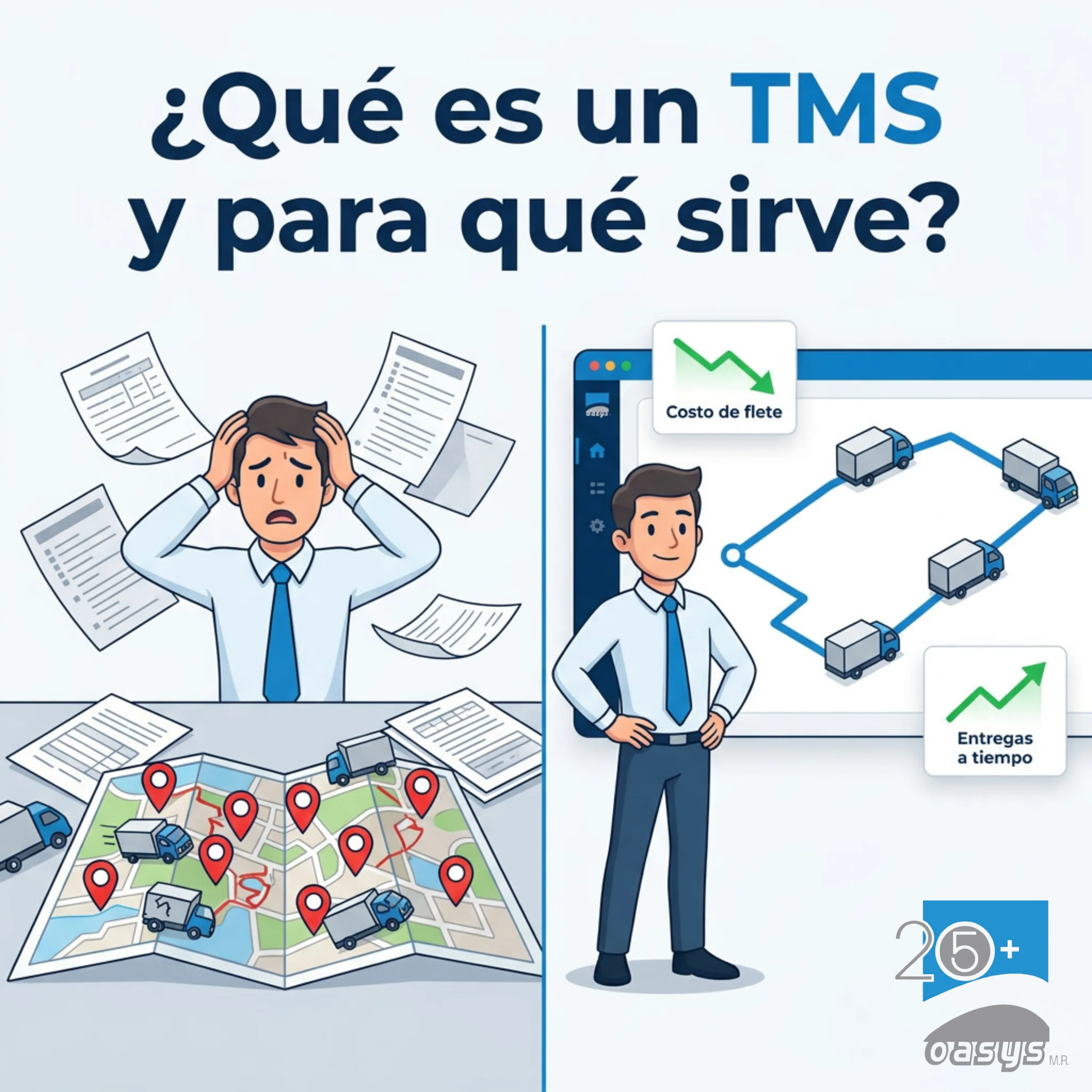
Satellite tracking tells you where a vehicle is right now and provides data; managing the fleet is the job of another system. The TMS, or transportation management system, plans and executes trips: it builds routes, assigns vehicles, generates manifests and trip documents, and confirms deliveries. Fleet management administers the asset those trips use. The three pieces complement each other, and the fleet is better controlled when vehicle information and trip information live in the same system.
What it controls, component by component
Vehicles and their files
Each vehicle has a record with its technical data (type, payload capacity, dimensions, model year, serial number), its documents with expiration dates, its current odometer reading and its complete history of services, tires, incidents and costs. With that record, the dispatcher knows which vehicle can take a refrigerated load, which one can handle the weight of an order and which one has a document expiring this week.
Drivers and their documents
Drivers have a file too: license and class, medical exam, training courses, incidents, fines and the history of vehicles and trips they have driven. The system warns of every expiration in advance and prevents a trip from being assigned to a driver whose license does not cover that vehicle. When a customer sets requirements for entering its plant, the file proves the driver meets them.
Preventive and corrective maintenance
The maintenance schedule is defined by kilometers or by time for each vehicle type: oil changes, brakes, tires, tune-ups, electrical system checks. The system compares the odometer reading recorded on each trip with the schedule and generates the work order before the vehicle reaches the limit. Each service is logged with its date, shop, parts and cost, so a vehicle's history explains how much it has cost to maintain and when it makes sense to replace it.
Fuel and fuel economy
Each fill-up is recorded with the vehicle, the driver, the liters, the amount and the odometer reading at the time. With that information, the system calculates fuel economy by vehicle and by driver, and flags fill-ups that fall out of range: consumption that suddenly rises usually points to a mechanical fault, a route different from the one assigned or fuel that never reached the tank. Fuel cards and receipts are reconciled against that record.
Trips, kilometers and cost per vehicle
Each trip adds kilometers to the vehicle and the driver and accumulates its costs: fuel, tolls, travel allowances, loading and unloading, and any expense on the road. At month-end, the system delivers the cost per kilometer of each vehicle and the cost per trip and per customer. That figure is the basis for setting rates, comparing your own fleet against an outside carrier and spotting the vehicle that costs more than it brings in.
Incidents, fines and accidents
Traffic violations, accidents, cargo damage and customer complaints are recorded against the vehicle, the driver and the trip. Over time, that history reveals patterns: a route with more incidents, a driver with more fines, a vehicle that goes into the shop every month. Without the record, each incident is handled as an isolated event and the same problems keep repeating.
What changes when the fleet is managed together with orders
Many companies keep the fleet in a spreadsheet and orders in another system. That separation forces someone to move the information by hand and produces Monday's scene: a truck assigned to a trip without anyone noticing that its insurance policy had expired.
Assigning the trip with the right vehicle and driver
When fleet management and the TMS share the same database, the dispatcher assigns each trip seeing only the vehicles that are available, with valid documents, no pending service and the capacity the order requires. The driver who appears is the one licensed for that vehicle and with nothing expiring this week. The system keeps a vehicle that should stay in the yard from going out on the road, instead of the problem being discovered on the highway.
The real cost of each delivery
If the trip is created from the order and the vehicle records its costs in the same system, the cost of transporting each order is known when the trip closes: kilometers, fuel, tolls and the vehicle's prorated maintenance cost. Sales knows which customers and routes leave a margin and which ones eat it up, and the decision to open a route or accept a load stops being made with an average rate.
Trip documents with the vehicle information
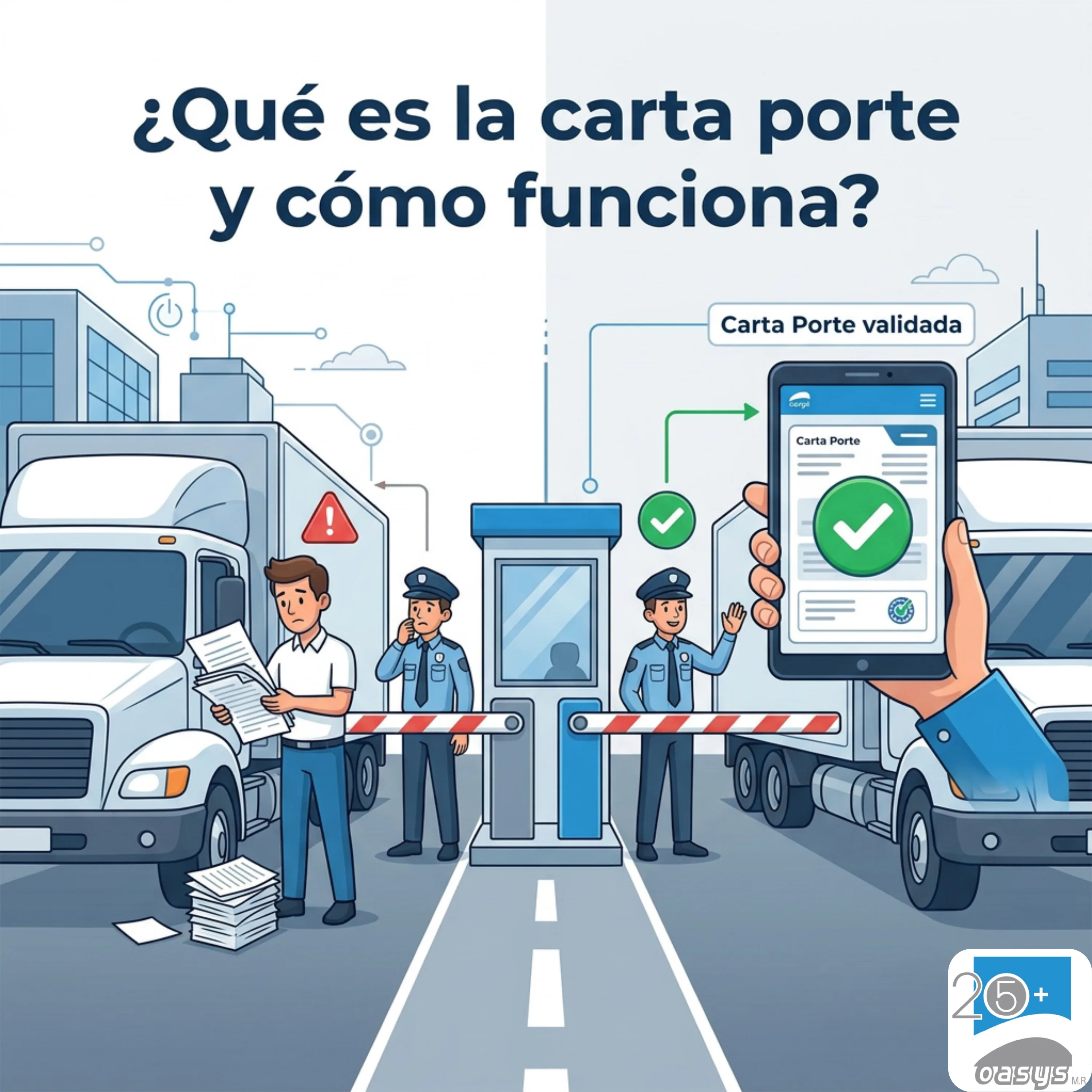
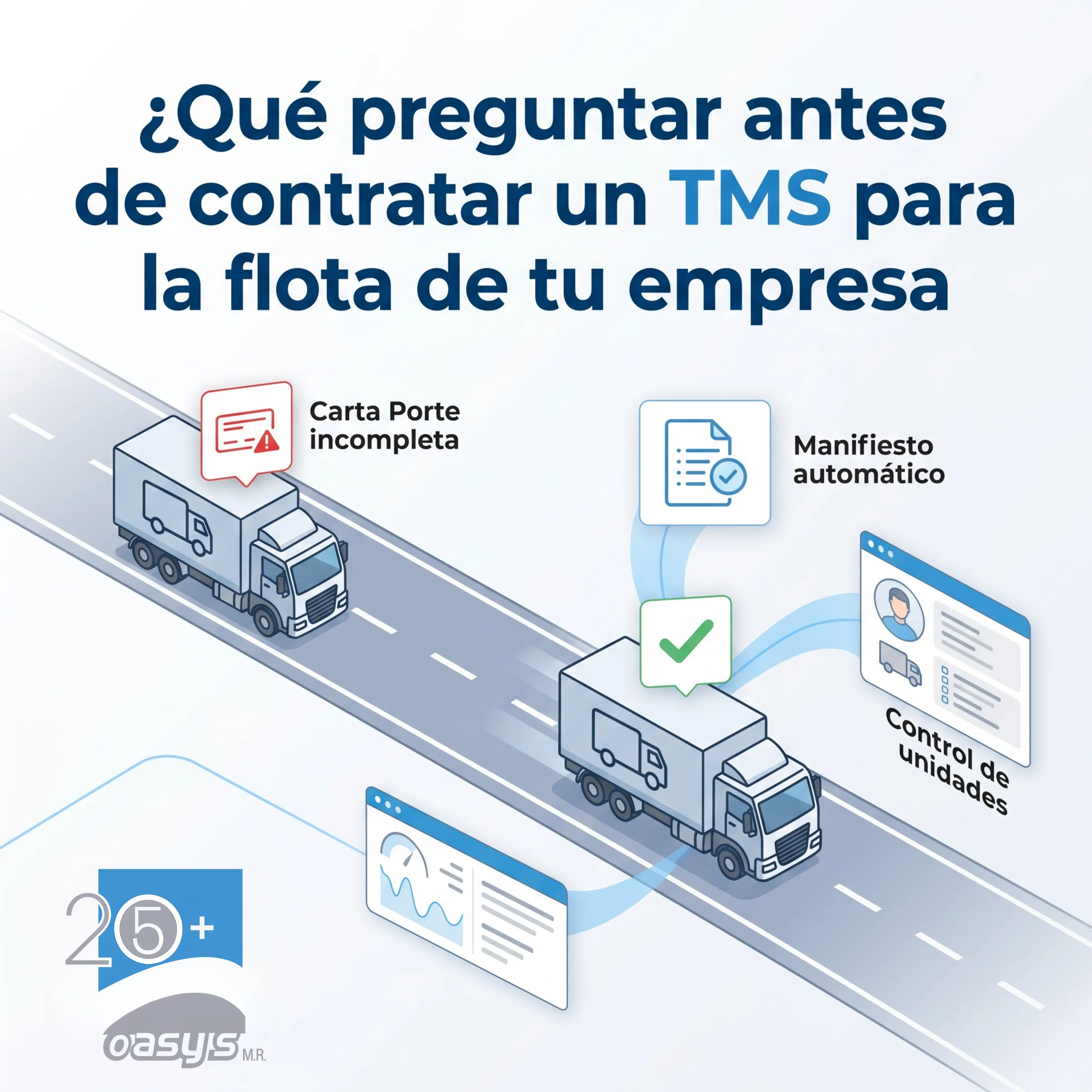
Manifests and the Carta Porte complement require data on the vehicle and the driver: license plates, vehicle configuration, insurance policy, name and license. When each vehicle's and each driver's file lives in the same system that generates those documents, the data is pulled from the record and not typed again for every trip. A policy change is entered once and appears correctly on every document that follows.
How to start without a months-long project
Fleet control is built in layers, and the first ones pay off in weeks. The first is the master list: every vehicle and every driver with their documents and expiration dates, with advance warnings. The second is recording kilometers and fuel per trip, which immediately shows fuel economy and abnormal consumption. The third is the maintenance schedule by kilometers, with work orders generated by the system.
With those three layers, the dispatcher stops assigning vehicles from memory and the manager stops rebuilding costs from receipts. The next step is connecting the fleet to trips and invoicing, so the cost of every delivery is recorded with no additional work.
Transportation, warehouse and administration on a single platform
At Oasys we have spent more than 30 years developing management systems for companies in Mexico. Our platform integrates ERP, WMS, TMS and Production on a single database, on our own servers. The transportation module builds trips from the orders the warehouse picked, assigns the vehicle and the driver, generates manifests and the Carta Porte complement with the recorded data, confirms deliveries and settles freight.
Because the trip, the order, the invoice and the costs live in the same system, your team knows the cost of every delivery when it closes and can view the information on screen, printed or in Excel. We work with distributors, logistics operators and manufacturing plants that move their own freight in Mexico.
Frequently asked questions
Does a fleet of eight vehicles need a fleet management system?
It does once expiration dates, services and fuel consumption can no longer be controlled reliably from a notebook, and that usually happens before ten vehicles. Size matters less than the cost of a stopped truck: if a missed delivery costs your company a penalty or a customer, system-based control pays for itself with just a few vehicles.
Does GPS tracking replace a fleet management system?
It feeds it, and the system is still needed. GPS provides position and kilometers traveled, which are valuable data for maintenance and fuel economy. The vehicle file, documents, services, costs and trip assignment still need a system that records them and ties them to each order.
What information should I have ready before implementing fleet control?
The master list of vehicles with their technical data and documents, the master list of drivers with their licenses and expiration dates, the current odometer reading of each vehicle and the maintenance schedule the manufacturer recommends for each vehicle type. With those four inputs, the system starts generating warnings and work orders from the first week.
If the dispatcher in your company assigns vehicles from memory and expired documents are discovered on the highway, every high-demand day is a risk that has not come due yet. At Oasys we integrate transportation with the warehouse, invoicing and administration on a single database, on our own servers, so every trip leaves with the right vehicle and driver and at a known cost. Tell us how your fleet operates today and we will review with you which control to put in place first.
Want to see Oasys in action?
Schedule a demo with our team and we'll show you the platform with use cases from your sector.
Talk to an expert